Are you wondering how to measure a chair? This guide provides a step-by-step approach to accurately measure your chair, whether you’re planning to reupholster it, buy a slipcover, or simply need to know its dimensions for space planning. We’ll cover everything from chair dimensions to specific measurements like seat height, chair width, and back height.
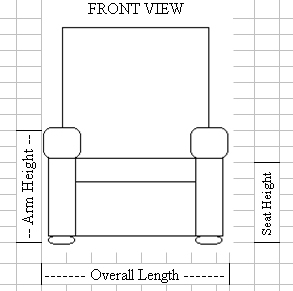
Image Source: www.carolinachair.com
Why Accurately Measuring Your Chair Matters
Accurate chair measurements are crucial for several reasons:
- Upholstery Projects: Knowing the exact chair dimensions is essential for ordering the correct amount of fabric and ensuring a professional-looking result.
- Slipcover Purchase: A perfectly fitted slipcover relies on precise measurements. Avoid ill-fitting covers by following our guide on how to measure chair for slipcover.
- Furniture Placement: When planning your room layout, knowing the chair size helps you optimize space and avoid overcrowding.
- Buying Online: Online furniture descriptions can be vague. Accurate measurements give you confidence that the chair will fit your needs.
- Custom Chair Creation: Whether you’re building a chair from scratch or modifying an existing one, precise measurements are the foundation of a successful project.
Essential Tools for Measuring Your Chair
Before you start, gather these essential tools:
- Measuring Tape: A flexible measuring tape is ideal for accurately measuring curved surfaces.
- Ruler or Straight Edge: Use a ruler or straight edge to measure straight lines, such as seat depth and armrest height.
- Pencil and Paper: Keep a notepad handy to record each measurement.
- Level (Optional): A level ensures you’re measuring heights from a consistent, horizontal plane.
- Helper (Optional): Having someone assist you can make the process easier, especially when measuring large or awkward chairs.
Step-by-Step Guide to Measuring Your Chair
Follow these steps to accurately measure your chair’s critical dimensions:
1. Measuring Seat Height
What is seat height? It’s the distance from the floor to the top of the seat cushion.
- Procedure: Place the measuring tape on the floor directly in front of the chair. Extend the tape vertically to the highest point of the seat cushion.
- Important Note: If the chair has a removable cushion, measure with the cushion in place. If the cushion is significantly compressed, you may want to measure both with and without the cushion to get a range.
2. Determining Chair Width
What is chair width? It is the total horizontal distance from one armrest edge to the other, or the widest point of the seat if there are no armrests.
- Procedure: Place the measuring tape horizontally across the widest part of the chair. This is usually between the outermost points of the armrests. If the chair has no armrests, measure the widest part of the seat.
- Important Note: Ensure the measuring tape is parallel to the floor for an accurate reading.
3. Finding Chair Depth
What is chair depth? It is the measurement from the front edge of the seat to the back of the chair.
- Procedure: Place the measuring tape along the surface of the seat, starting at the front edge and extending to the point where the seat meets the backrest.
- Important Note: If the back of the chair curves, measure to the furthest point of the curve.
4. Calculating Back Height
What is back height? It is the vertical distance from the top of the seat to the highest point of the chair back.
- Procedure: Place the measuring tape vertically, starting at the top of the seat (where your back rests) and extending to the highest point of the chair back.
- Important Note: If the chair back has a curve, follow the curve with the measuring tape for a more accurate reading.
5. Defining Armrest Height
What is armrest height? It is the vertical distance from the top of the seat to the top of the armrest.
- Procedure: Place the measuring tape vertically, starting at the top of the seat and extending to the highest point of the armrest.
- Important Note: If the armrests are angled, measure at the highest point where your arm would naturally rest. Measure both armrests separately, as they may not be exactly the same height.
6. Total Chair Height
What is total chair height? It is the vertical distance from the floor to the highest point of the chair back.
- Procedure: Place the measuring tape on the floor directly behind the chair. Extend the tape vertically to the highest point of the chair back.
- Important Note: This measurement gives you an overall sense of the chair’s size and how it will fit in a room.
7. Measuring Between the Arms
Why is it important to measure between the arms? This measurement helps determine the available seating space.
- Procedure: Place the measuring tape horizontally between the inner edges of the armrests at the seat level.
- Important Note: This measurement is especially useful when choosing a chair based on comfort and available space for the user.
Measuring Chair for Specific Purposes
Measuring Chair for Upholstery
How to measure a chair for upholstery? Measure each section of the chair separately (seat, back, arms) and add extra for seam allowance and pattern matching.
When measuring chair for upholstery, take detailed measurements of each section that will be covered with fabric.
- Seat: Measure the width and depth of the seat cushion. If the cushion has welting or piping, measure from seam to seam.
- Back: Measure the height and width of the chair back. If the back is curved, measure the curve’s length.
- Arms: Measure the length, width, and height of each arm. If the arms are padded, measure around the padding.
- Frame: Measure any exposed wooden frame that will be upholstered.
- Extra Fabric: Add extra inches to each measurement for seam allowances (typically 1-2 inches), pattern matching (if using patterned fabric), and potential errors.
- Photographing Your Chair: Take photos of your chair from different angles. This will assist you with the reassembly process.
- Pro Tip: It’s better to have too much fabric than not enough.
How to Measure Chair for Slipcover
How to measure chair for slipcover? Measure the overall height, width, depth, and arm height, then compare to the slipcover’s size guide.
When figuring out how to measure chair for slipcover, focus on the overall dimensions of the chair.
- Overall Height: Measure from the floor to the highest point of the chair back.
- Overall Width: Measure the widest point of the chair, usually between the armrests.
- Overall Depth: Measure from the front edge of the seat to the back of the chair.
- Arm Height: Measure from the floor to the top of the armrests.
- Seat Width: Measure across the seat between the arms.
- Compare to Size Guide: Once you have your measurements, compare them to the slipcover manufacturer’s chair size guide. Choose a slipcover that is slightly larger than your chair’s dimensions for a comfortable fit.
- Consider Style: Some slipcovers are designed for specific chair styles (e.g., wingback, Parsons). Make sure the slipcover you choose is compatible with your chair’s design.
Grasping Standard Chair Measurements
While chairs come in various sizes and styles, there are some standard chair measurements that can serve as a general guideline:
| Measurement | Standard Range | Notes |
|---|---|---|
| Seat Height | 16-20 inches | Average is 18 inches; higher for bar stools, lower for children’s chairs |
| Seat Width | 18-22 inches | Varies based on chair style and intended use |
| Seat Depth | 18-22 inches | Affects comfort; deeper seats are more relaxed |
| Back Height | 18-24 inches | Taller backs offer more support |
| Armrest Height | 8-12 inches above seat | Allows comfortable arm placement |
| Overall Chair Width | 24-30 inches | Varies based on armrest design |
Note: These are just general guidelines, and actual measurements can vary significantly.
Deciphering Chair Types and Measurement Nuances
Different chair types may require slightly different measurement approaches:
- Armchairs: Focus on measuring the width between the arms, arm height, and overall width.
- Side Chairs: Since they lack arms, focus on seat width, seat depth, and back height.
- Dining Chairs: Seat height is crucial for comfortable dining; ensure it’s compatible with your table height.
- Lounge Chairs: These tend to be larger and more relaxed; pay attention to seat depth and back height for optimal comfort.
- Wingback Chairs: Measure the width of the wings at their widest point and the overall height of the back.
- Office Chairs: Measure seat height, back height, and armrest height to ensure ergonomic support.
Expert Tips for Accurate Chair Measurement
- Measure Twice, Cut Once: Always double-check your measurements to avoid errors.
- Use Consistent Units: Use the same unit of measurement (inches or centimeters) throughout the process.
- Account for Curves: For curved surfaces, use a flexible measuring tape or follow the curve with the tape.
- Consider Fabric Thickness: When measuring for upholstery, account for the thickness of the new fabric.
- Photograph Your Chair: Take photos of your chair from different angles to help with upholstery or slipcover projects.
- Draw a Diagram: Sketch a simple diagram of the chair and label each measurement.
- Round Up (Slightly): When in doubt, round up to the nearest half-inch to ensure adequate material.
- Check for Symmetry: Verify that both sides of the chair are symmetrical. If not, measure each side separately.
- Take Your Time: Don’t rush the process; accuracy is key to a successful outcome.
Fathoming Measurement Challenges and Solutions
- Challenge: Measuring curved surfaces accurately.
- Solution: Use a flexible measuring tape and carefully follow the curve.
- Challenge: Measuring a chair with unusual angles or shapes.
- Solution: Break down the chair into smaller sections and measure each section separately.
- Challenge: Accounting for the thickness of the new fabric when measuring for upholstery.
- Solution: Add an extra inch or two to each measurement to allow for the fabric’s thickness.
- Challenge: Measuring a chair with a very soft or compressed cushion.
- Solution: Measure the cushion both with and without compression to get a range.
- Challenge: Measuring the height of a chair with a sloping seat.
- Solution: Use a level to ensure you are measuring from a consistent horizontal plane.
FAQ About Measuring Chairs
- What’s the best way to measure a chair for reupholstering?
- Measure each section of the chair individually, adding extra inches for seam allowances and pattern matching. Take pictures of the chair before disassembling it to assist with reassembly.
- Can I use a regular measuring tape for measuring a chair?
- Yes, a regular measuring tape is fine, but a flexible measuring tape is better for curved surfaces.
- What do I do if my chair has an irregular shape?
- Break the chair down into smaller, more manageable sections and measure each section separately.
- Is it better to overestimate or underestimate when measuring for upholstery?
- It’s generally better to overestimate slightly to ensure you have enough fabric. You can always trim excess fabric, but you can’t add more if you come up short.
- How accurate do my chair measurements need to be?
- Aim for accuracy within 1/4 inch, especially for critical measurements like seat height and width.
Conclusion
Nailing down a chair’s precise measurements is more than just a quick eyeball; it’s the cornerstone of a flawless furniture revamp, from a complete reupholster to slipping on a new cover or just finding its perfect spot. Armed with these insights and a keen eye, you’ll effortlessly capture those crucial chair dimensions, paving the way for smart decorating choices. Think of it as your secret weapon: a thorough double-check, the right gear, and a nod to your chair’s quirks will transform your design ambitions into effortless victories.

Hello, I’m Muzammil Siddiqui, the mind behind ChairsFly.com.. With a deep passion for chairs and a wealth of expertise, I created this platform to share my insights, experiences, and knowledge about everything chair-related. From ergonomic solutions to stylish designs, my goal is to guide you in finding the perfect seat for your needs. Let’s embark on this journey of comfort and elegance together!